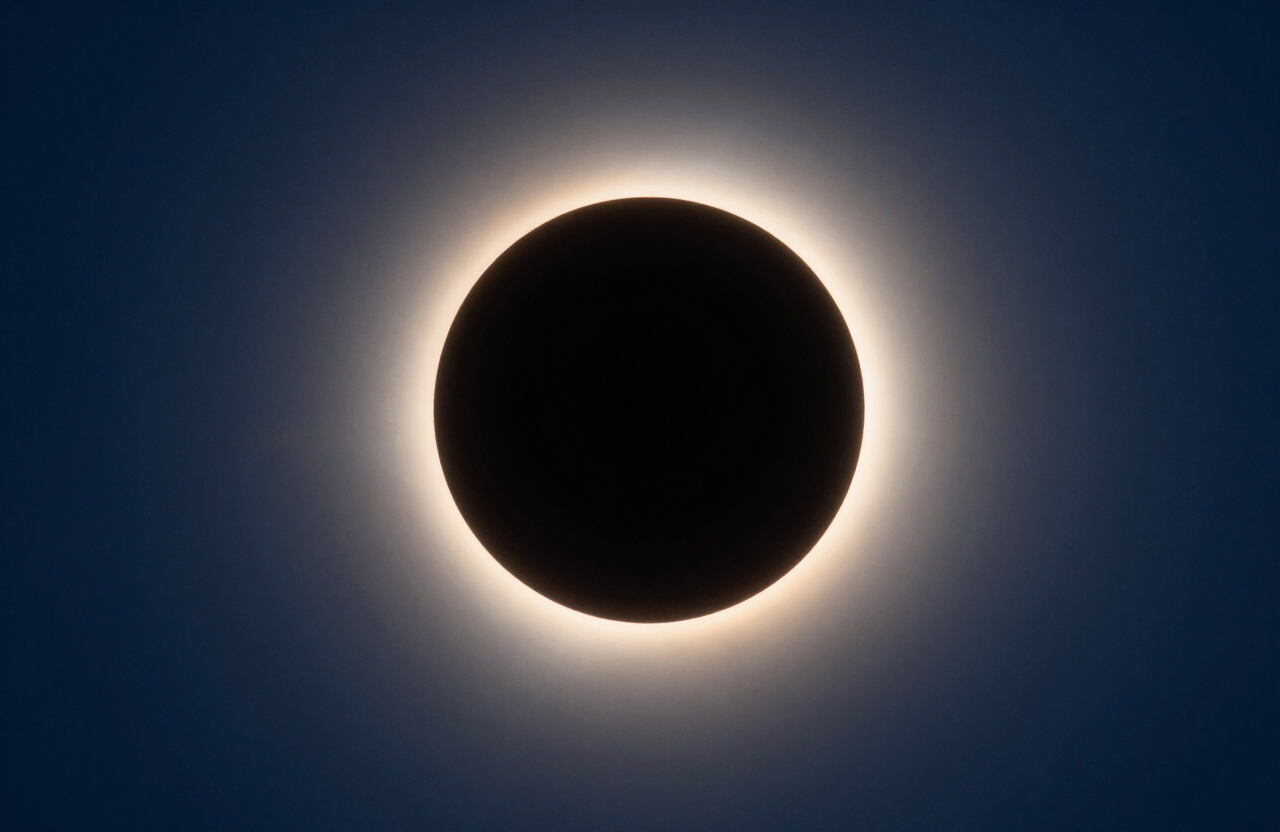
A Ring of Fire in the Sky
Just two weeks after September's total lunar eclipse, the Sun and Moon stage a second act: an annular solar eclipse on September 21, 2026. Because the Moon is near the farthest point in its orbit, it appears slightly too small to cover the Sun completely, leaving a brilliant ring of sunlight — the famous "ring of fire" — blazing around the Moon's silhouette.
It is one of the most photogenic of all celestial events, but it carries a serious safety warning: that exposed ring of Sun is still dangerously bright and must never be viewed without proper solar filters.
Total vs. Annular: What Is the Difference?
A total solar eclipse happens when the Moon is close enough to Earth to fully cover the Sun's disk, plunging viewers into daytime darkness. An annular eclipse happens when the Moon is near apogee — its farthest point from Earth — so its apparent disk is smaller than the Sun's. The Moon covers the center but not the edges, leaving a bright annulus (Latin for "ring") of sunlight visible.
Because some Sun always remains exposed, an annular eclipse never produces the deep darkness, visible corona, or stars that a total eclipse does. But the glowing ring is a stunning sight in its own right.
Where the September 2026 Eclipse Is Visible
The annular phase traces a narrow path across parts of southern South America, the South Atlantic, and into the Indian Ocean. Observers within this path see the full ring of fire for up to a few minutes. A much wider region — including most of South America, parts of Antarctica, and stretches of the Atlantic and Indian Oceans — sees a partial solar eclipse, where the Moon takes a bite out of the Sun's edge.
Exact timing and visibility depend on your location, so consult a detailed eclipse map before planning your viewing.
How to Watch Safely
Solar eclipses demand certified eye protection at every phase except the brief totality of a total eclipse — and an annular eclipse has no safe naked-eye moment at all. Use ISO 12312-2 eclipse glasses or a handheld solar viewer, and inspect them for scratches before use. Never look through binoculars or a telescope without a proper solar filter mounted on the front; unfiltered optics can cause instant, permanent eye damage.
Pinhole projection is a simple, safe alternative: punch a small hole in card, hold it over the ground, and watch the projected crescent Sun shimmer in the shadow.
Key Takeaways
- Annular solar eclipse on September 21, 2026 — a ring of fire
- The Moon is too far from Earth to fully cover the Sun
- Visible across a path through South America, the Atlantic, and Indian Ocean
- Never view without certified solar filters — the ring is dangerously bright
- Pinhole projection offers a safe, simple viewing method