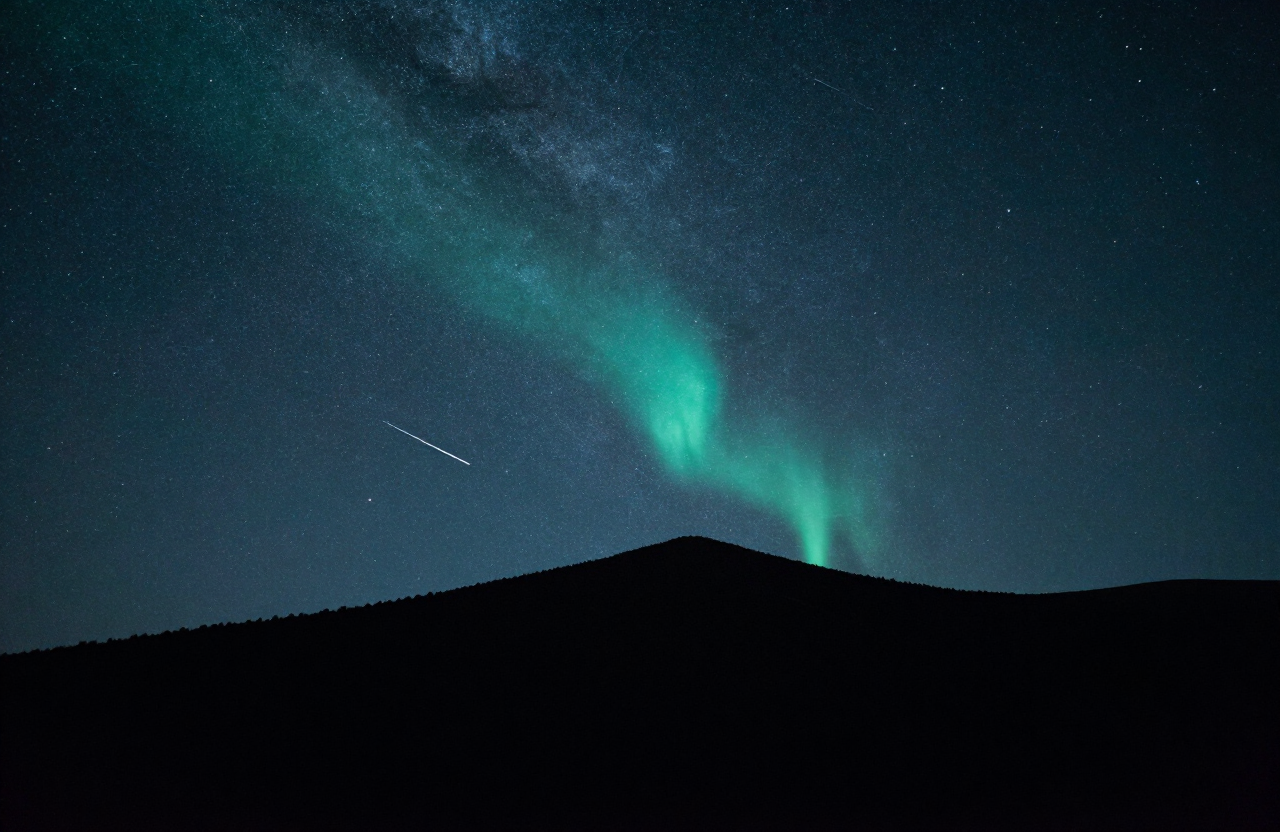
A Quiet Shower After the Perseids
Once the Perseids have faded in mid-August, a lesser-known meteor shower quietly takes the stage. The Aurigids are active in the closing days of August, peaking around August 28 to September 1, and they offer a rewarding surprise for observers willing to wake before dawn.
The Aurigids are a modest shower, typically producing only a handful of meteors per hour, but they are known for occasional bright, fast fireballs that make the early alarm worthwhile.
Where the Aurigids Come From
The Aurigids originate from the dust of comet Kiess (C/1911 N1), a long-period comet that swings through the inner solar system roughly every 2,000 years. Each time it passes, it leaves behind a fresh trail of debris, and Earth grazes that trail at the end of August.
Because the parent comet visits so rarely, the debris stream is narrow and the shower can be unpredictable — occasionally flaring into brief outbursts of enhanced activity.
When and Where to Look
The Aurigid radiant sits in the constellation Auriga, which rises in the northeast in the hours before dawn. The best viewing window runs from roughly 2:00 AM until the first hints of twilight, when the radiant climbs higher in the sky.
Find a dark location away from city lights, allow your eyes at least 20 minutes to adapt, and look about halfway up the sky. Meteors can appear anywhere, but they will trace back toward Auriga.
What Makes the Aurigids Special
Aurigid meteors enter the atmosphere at high velocity, often producing vivid colors — greens and blues from ionized oxygen and nitrogen — and occasional persistent trains. Their rarity and unpredictability give the shower a cult following among dedicated meteor observers.
Key Takeaways
- Aurigids peak around August 28 to September 1, 2026
- Best viewed in the predawn hours, looking northeast
- Parent comet is the long-period comet Kiess
- A modest shower known for bright, fast, colorful fireballs
- Unpredictable — occasional short outbursts are possible