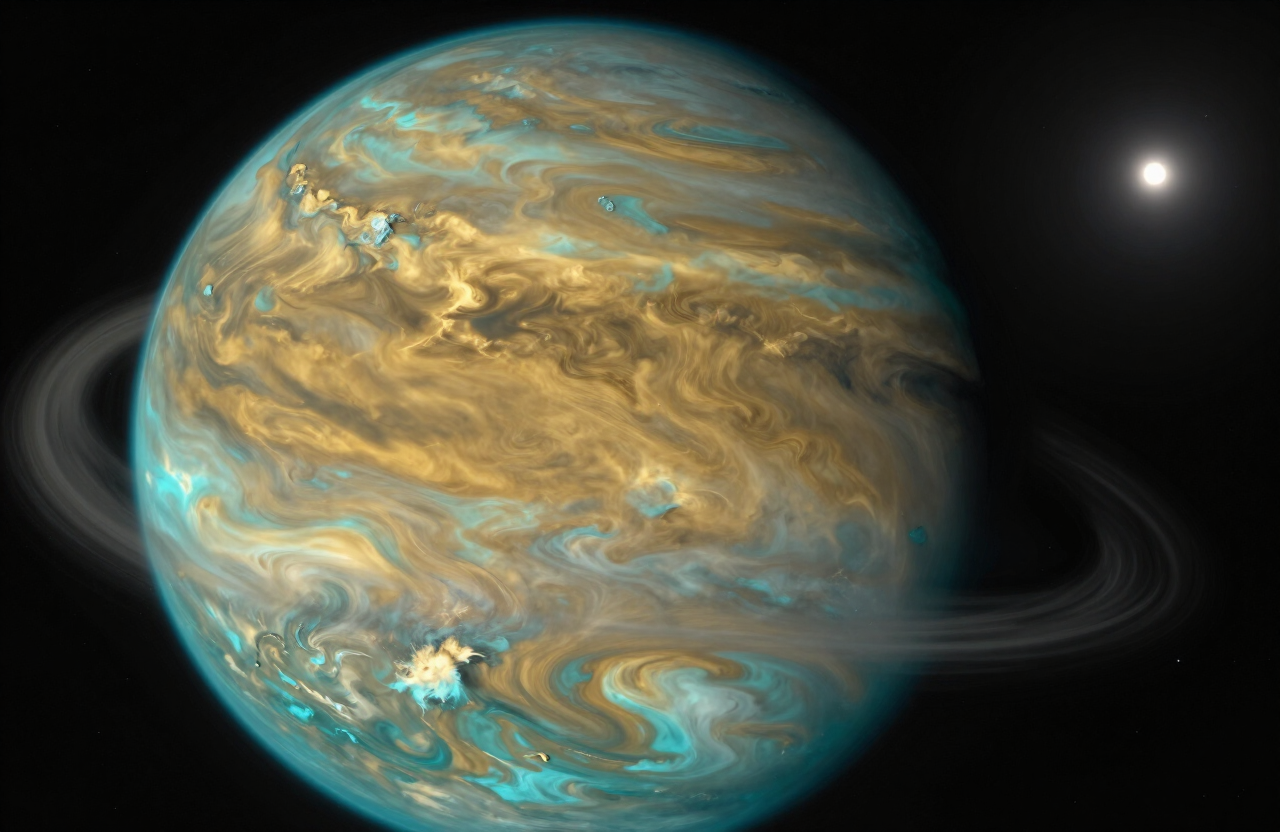
A Telltale Signature in Alien Skies
In a late-August 2026 breakthrough, the James Webb Space Telescope detected water vapor in the atmosphere of a distant exoplanet, adding a powerful new data point to the search for habitable worlds beyond our solar system. By splitting the planet's light into its component colors, Webb identified the chemical fingerprint of water molecules absorbing starlight.
Water vapor alone does not make a world habitable, but it is one of the key ingredients astronomers look for when ranking exoplanets by their potential to support life as we understand it.
How Webb Reads an Atmosphere
Webb studies exoplanet atmospheres through transmission spectroscopy. When a planet crosses in front of its host star, a thin sliver of starlight filters through the planet's atmosphere. Different molecules absorb different wavelengths, leaving a unique chemical barcode in the light that reaches Webb's instruments.
Because Webb observes in infrared light, it can detect molecules — like water vapor, methane, and carbon dioxide — that are invisible or ambiguous to older visible-light telescopes.
Why Water Vapor Matters
Water is the solvent of life as we know it. Finding water vapor in an exoplanet atmosphere tells astronomers that the planet has at least one of the prerequisites for life, and that its atmosphere is thick and stable enough to hold onto volatile molecules.
The next step is searching for an accompanying biosignature — oxygen, methane, or other gases that, in combination, could hint at biological activity rather than purely chemical processes.
The Road Ahead
Webb will continue observing dozens of exoplanet atmospheres through the rest of 2026, building a comparative catalog of worlds. Each detection refines the shortlist of planets worth deeper follow-up by future observatories.
Key Takeaways
- Webb detected water vapor in a distant exoplanet's atmosphere in late August 2026
- Transmission spectroscopy reveals a planet's chemical fingerprint
- Water vapor is a key ingredient in the search for habitable worlds
- Next goal: detecting biosignature gases in combination
- Webb is building a comparative catalog of exoplanet atmospheres