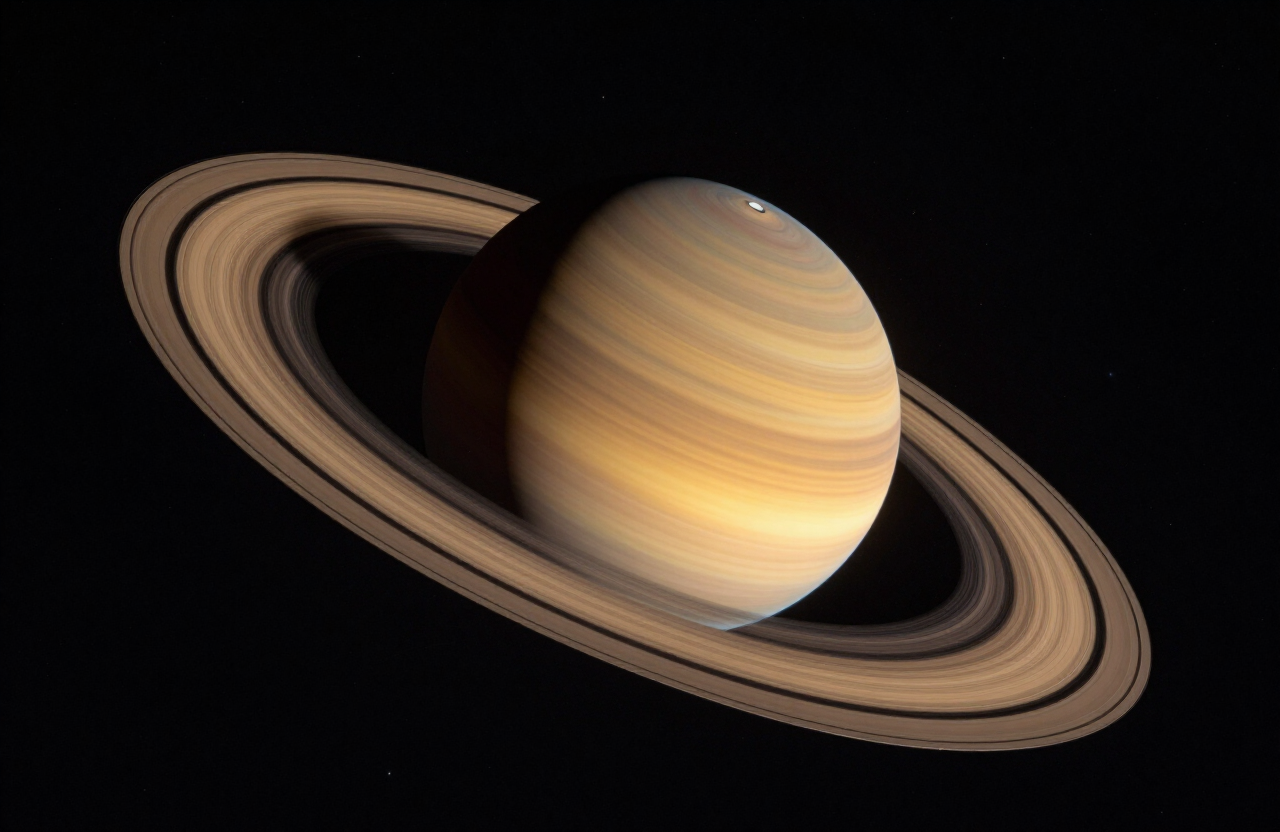
The Ringed Planet Takes Center Stage
As August winds down, Saturn reaches opposition — the moment when Earth sits directly between the ringed planet and the Sun. In late August 2026, Saturn rises at dusk, climbs highest around midnight, and stays visible until dawn, making it the marquee planet of the closing summer sky.
At opposition, Saturn is at its closest approach to Earth for the year and appears at its brightest and largest. Even a small telescope will reveal the planet's magnificent ring system, the reason Saturn remains the most photographed object in amateur astronomy.
What Opposition Really Means
Opposition is an orbital alignment, not a collision course. Saturn and Earth orbit the Sun at very different speeds — Saturn takes nearly 30 years to complete one lap — so roughly once a year the two planets line up on the same side of the Sun. That is when they are closest and Saturn appears fully illuminated from our viewpoint.
Because Saturn is opposite the Sun in our sky, it rises in the east just as the Sun sets in the west, then sets as the Sun rises — a full night of viewing with no long waits.
How to See the Rings
Saturn is an easy naked-eye object, looking like a steady, pale-gold star in the constellation Pisces. But the rings demand a telescope. A 3-inch refractor or a 4-inch reflector at 50x or more will begin to resolve them; 100x or higher reveals the dark Cassini Division separating the bright A and B rings.
This year the rings are tilted at a favorable angle, giving a wide, open view. Over the next few years that tilt will shrink as Saturn moves toward its 2025 ring-plane crossing, so late August 2026 is one of the better remaining windows for a classic wide-ring view.
Spotting Saturn's Moons
With a modest telescope you can also hunt Saturn's largest moon, Titan, appearing as a tiny orange star drifting beside the planet. Under darker skies and steady seeing, keen observers may pick up Rhea, Tethys, and Dione closer to the rings.
Key Takeaways
- Saturn reaches opposition in late August 2026 — visible all night
- At its brightest and closest for the year
- A small telescope at 50x+ reveals the iconic rings
- Rings are tilted wide for a classic open view
- Look for Titan, Saturn's largest moon, nearby