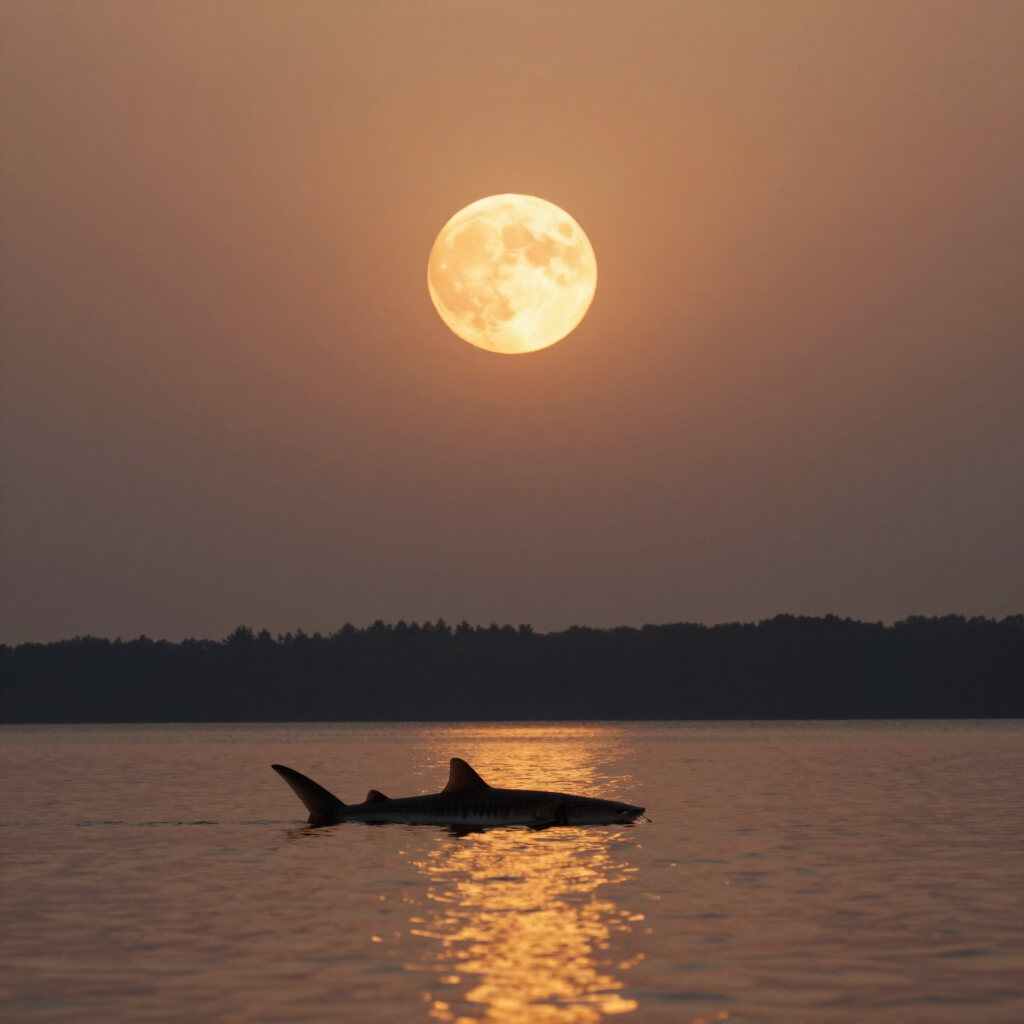
A Full Moon Bigger and Brighter Than Usual
On August 19, 2026, the full Sturgeon Moon will rise — and this year it arrives as a supermoon, appearing noticeably larger and brighter than an ordinary full Moon. It is one of the most photogenic celestial events of late summer.
A supermoon occurs when the full Moon coincides with perigee, the closest point in the Moon's elliptical orbit around Earth. At perigee, the Moon sits roughly 356,500 kilometers away, about 30,000 kilometers closer than at its farthest point.
Why It Is Called the Sturgeon Moon
The name comes from Native American traditions, particularly the Algonquin peoples, who noted that the large sturgeon fish of the Great Lakes were most readily caught during this full Moon. Each month's Moon name reflects seasonal rhythms in the natural world.
Other traditional names for August's full Moon include the Green Corn Moon and the Grain Moon, all marking the late-summer harvest season.
How Much Bigger Will It Look?
A supermoon can appear up to 14% larger and 30% brighter than a full Moon at apogee (the farthest point). While the difference is subtle to the unaided eye, the Moon always appears largest near the horizon due to the "Moon illusion" — a psychological effect that makes rising moons seem enormous.
For the best experience, watch the Moon rise in the east shortly after sunset, when warm atmospheric hues frame its golden disk.
Photographing the Supermoon
Include a foreground landmark — a tree, building, or distant ridge — to give the Moon a sense of scale. Use a telephoto lens and a fast shutter speed to keep the lunar surface sharp. A tripod is essential for crisp, detailed shots.
Key Takeaways
- Full Sturgeon Supermoon: August 19, 2026
- Up to 14% larger and 30% brighter than an average full Moon
- Best viewed at moonrise for the horizon illusion
- Name honors the sturgeon fish of the Great Lakes
- Excellent astrophotography opportunity